
 Yes. Strength training is one of the most effective ways to maintain and improve bone density. When your muscles pull against resistance, they place stress on your bones, and your body responds by reinforcing them. At Top Tyr Training, we use adaptive resistance technology and personalized coaching to help clients build stronger bones safely, efficiently, and with measurable progress every session.
Bone health is rarely the reason people walk into a gym. Most people come in wanting to get stronger, lose fat, or feel more energetic. But bone density quietly shapes how well you age, how resilient you are to falls, and how long you can stay active doing the things you love. Here is what you should know.
What Is Bone Density and Why Does It Matter?
Bone density refers to the amount of mineral packed into your bone tissue. Denser bones are stronger and less likely to fracture. Lower density means more fragile bones, which can lead to conditions like osteopenia and osteoporosis.
Your bones are living tissue. They are constantly being broken down and rebuilt in a process called remodeling. In your younger years, your body builds bone faster than it breaks it down. Most people reach peak bone mass somewhere around their late twenties to early thirties. After that, the balance gradually shifts, and bone loss can speed up with age, especially for women after menopause.
The good news is that bone responds to how you use it. Give it the right kind of stress, and it adapts.
How Does Strength Training Build Stronger Bones?
Bones grow stronger when they are loaded. Every time a muscle contracts against resistance, it tugs on the bone it is attached to. That mechanical stress signals specialized cells to lay down new bone tissue where it is needed most.
This is why activities like walking, swimming, or cycling, while excellent for heart health, do relatively little for bone density on their own. They do not challenge the skeleton with enough force. Resistance training does. Exercises that load the hips, spine, and legs are especially valuable because those are the areas most vulnerable to fractures later in life.
Strength training also helps bones indirectly:
- Stronger muscles improve balance and stability, lowering your risk of falls.
- Better posture and alignment reduce uneven stress on joints and the spine.
- Increased muscle mass supports your metabolism and overall physical resilience.
In other words, strength training protects you twice: it strengthens the bone itself and builds the muscle that keeps you from falling in the first place.
Why Is Traditional Weightlifting Hard for Bone Health Goals?
Here is the challenge. To stimulate bone growth, the resistance needs to be meaningful. Light weights and high repetitions do not provide much of a bone-building signal. But heavy free weights come with real risks, particularly for people who are new to training, recovering from an injury, or already concerned about bone fragility.
Many people end up stuck in the middle. They lift weights that feel safe but are too light to make a difference, or they push too hard with heavy loads and risk injury. Neither approach serves bone health well.
How Does ARX Make Bone-Loading Exercise Safer?
This is where Adaptive Resistance Exercise changes the equation. ARX is a computer-controlled, motorized system that matches your effort in real time. Instead of lifting a fixed weight, you push and pull against a machine that automatically adjusts to your strength at every point of the movement.
That matters for bone health in several ways:
- You can safely work at high intensity. Because the resistance only meets the force you produce, you can push hard without a heavy weight dropping on you or pulling you out of position.
- There is no guesswork. ARX gives you the right amount of resistance throughout the full range of motion, so your muscles and bones get a meaningful challenge on every rep.
- Progress is measured, not estimated. The software tracks your force output session by session, so you can see your strength improving over time.
- Workouts are short. Full-body sessions take just minutes, making it far easier to stay consistent, which is essential for long-term bone health.
For clients who have been told by their doctor to “start lifting weights” but feel nervous about a traditional gym, ARX offers a safer starting point that still delivers real loading.
Who Should Prioritize Strength Training for Bone Health?
Everyone benefits from strong bones, but some people should pay closer attention:
- Women approaching or past menopause
- Adults over 50 who want to stay independent and active
- Anyone with a family history of osteoporosis or fractures
- People who have spent years doing mostly cardio with little resistance work
- Former athletes who have become less active
Bone health is not just a concern for older adults. Building strength in your thirties and forties creates a stronger foundation that pays off for decades.
How Can You Track Your Progress?
At Top Tyr Training, we help you track the factors that support bone health. ARX records your strength gains with precision, and our InBody scans measure muscle mass and body composition so you can see how your body is changing.
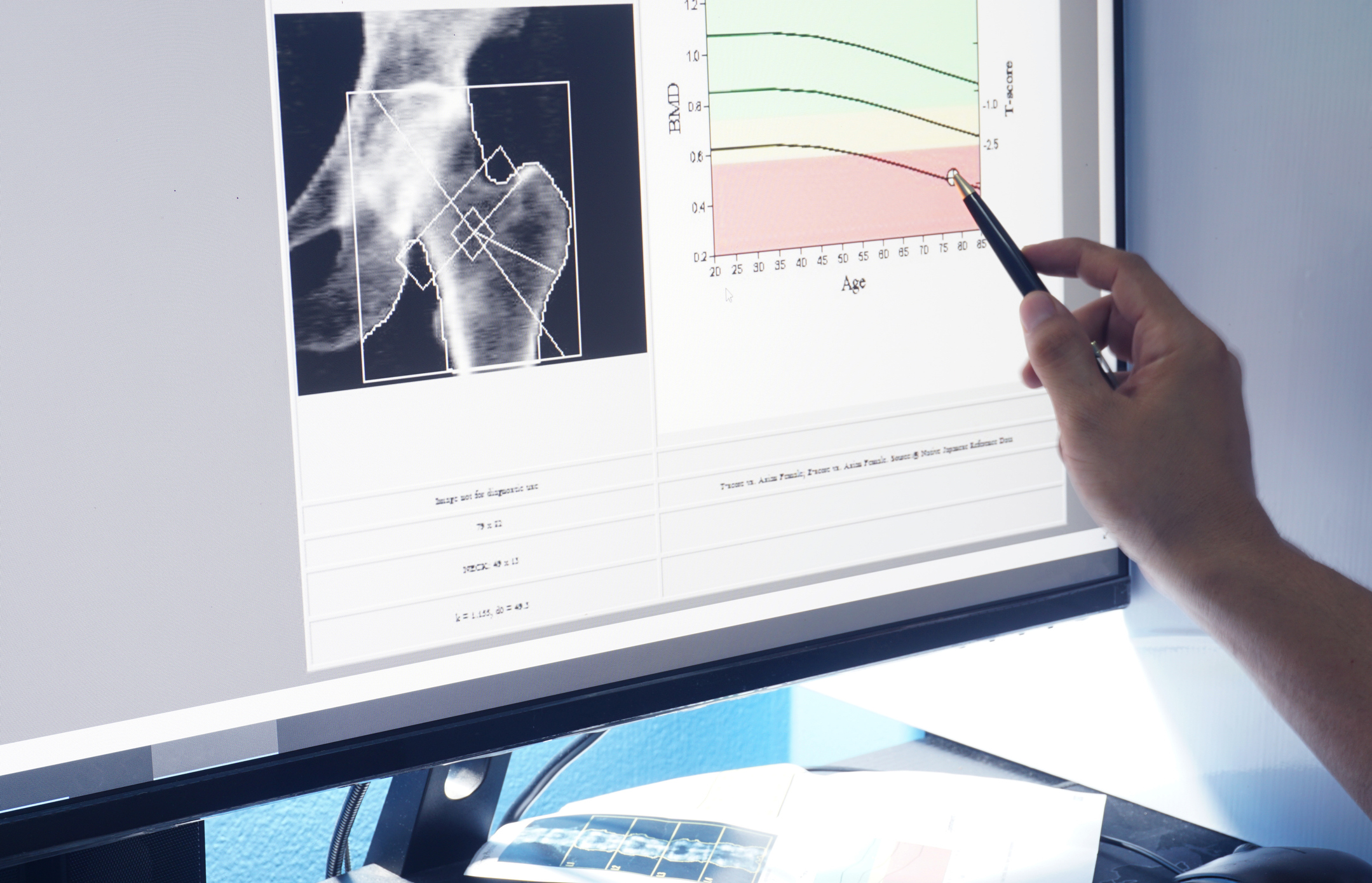
It is worth noting that bone density itself is measured through a medical test, typically a DEXA scan ordered by your doctor. If you have concerns about osteopenia or osteoporosis, talk with your physician first. Our team is happy to build a program that works alongside your doctor’s guidance.
What Does a Bone-Smart Training Program Look Like?
A well-designed program combines safe, progressive resistance with movement quality. Through our personal training services, your coach will build a plan that fits your body, your history, and your goals. That plan may include:
- ARX sessions focused on major muscle groups that load the hips, legs, and spine
- Mobility and stability work to improve balance and reduce fall risk
- Postural alignment training to support healthy joint mechanics
- Regular progress reviews using real strength and body composition data
Every program is individualized. A client managing an old injury will train differently than a client preparing for an active retirement, and our coaches adjust accordingly.
Frequently Asked Questions
How often should I strength train to improve bone density?
Consistency matters more than volume. Even one or two focused, high-quality sessions per week can provide meaningful benefits when the resistance is challenging enough. Our efficient ARX workouts make it realistic to train regularly without spending hours in the gym.
Is it too late to improve bone health after 60?
No. Bone continues to respond to loading throughout life. Older adults can still slow bone loss, build muscle, and improve balance with the right program, as long as it is introduced safely and progressed gradually.
Can strength training help if I already have osteoporosis?
Many people with osteoporosis can benefit from carefully designed resistance training, but you should always get clearance from your doctor first. Once you have the green light, our trainers can design a program that respects your limitations.
Is walking enough to protect my bones?
Walking is great for overall health, but it usually does not provide enough force to significantly strengthen bones. Pairing it with resistance training offers much better protection.
Build a Stronger Foundation With Top Tyr Training
Strong bones help you stay active, independent, and confident for years to come. With adaptive technology, real-time data, and coaching tailored to your body, Top Tyr Training makes bone-building exercise safe, efficient, and effective for South Bay adults at every stage of life.
Ready to invest in your long-term strength? Call Top Tyr Training today at (424) 398-0041 to schedule your consultation and take the first step toward a stronger, healthier future.